Centennial

My dad was a pretty good dad. He was above average in many things. He taught his children some very positive values. He introduced and nurtured (among other things) our interest in reading, skiing, nature, music. 

Some things, however, were beyond him. 

I can’t figure out whether he was not effective as a math tutor or whether I was a hopeless student. Perhaps it was a bit of both. 

My father contended that math was “easy”. No opinion here. “Either you know it, or you don’t!” he said. His was a stark world of such absolutisms. A product of the great depression and the second world war, his world view was unquestionable. Poverty-bad. Nazis-bad. He was an aeronautical engineer, and he knew his stuff. He laid out how to solve the problems I was struggling with in tenth grade. It made perfect sense to him, but might as well have been Sanskrit to me. As I reminisce right now, I wonder if I just feigned ignorance hoping that he would solve my problems for me. He solved many many other problems as they arose. I leaned pretty heavily on his example and his advice in most things. No such luck. He expected me to know the rules that governed how to get the “right” answer. All I saw was a bunch of seemingly arbitrary rules that, if followed, gave some other seemingly arbitrary number. The exercise had zero meaning to me. I had to do it because society demands it for high school matriculation. It was like a punch line to a joke that went over my head. 

One of the defences that I cultivated as a kid with dyslexia was to make jokes and absurd statements to deflect from the fear of it being discovered that I’m not as clever as I thought I was. I couldn’t use this diversionary tactic with my father. He knew I was fudging. I quickly depleted his (admittedly small) supply of patience until it deteriorated to the point of us yelling at each other and his ordering me to not leave my room until it was done. He said I could “take your time, but the longer it takes, the more things you will miss.”

He checked in on my progress after a half hour or so. I was miserable. Sensing that he needed a different approach, he thought he’d cheer me up with a relevant story from his experience. He was calm. Probably bolstered by a glass of Sherry. He asked me to guess what his math mark was in University. My dad studied engineering at McGill University (interrupted by WWII).  I guessed wrongly that he got 90. We tried again several more times and I continually guessed wrong. He finally just told me. Not boastfully or bragging, but just matter-of-factly. “100%. Either you know it, or you don’t”. I was incredulous. I had never had 100% in anything. Not even close. The closest thing I ever had to a perfect score was my batting average in little league baseball. I hit .000 which is perfectly dreadful. It is essentially what a dead person could do. I was on a par with corpses. My dad was on a par with the Gods…..

He told me that when he enlisted in the Air Force, they looked at his math scores and wanted to send him to navigator school. My dad refused. He made the case for becoming a pilot and the recruiting officer relented. Dad had argued that “you want the really smart ones controlling the aircraft”.

His pep talk had the reverse effect on me from his intended result. I thought “how could you compete with that?….I give up!” I knew I was smart about a lot of things, but I was entirely prepared to not do math! I would not compete with perfect.

I flunked. Plan F.

I had to repeat math the next year (plan B) as it was still compulsory to matriculate. I could not avoid it. Fortunately my new teacher was Mr. Hayes. He was funny. He was patient, he made math at least bearable. He would stand by the board and flip his chalk while instructing or fielding questions. There was rhythm there. There was humour, there was absurdity. He never once dropped the chalk either. Mr. Hayes motivated me to just do the work and follow the guidelines. 

I am pretty sure Mr. Hayes did not get 100% in math. He probably didn’t get anything close to that in pedagogy either. I don’t know much about him, really. I have thought about him about as infrequently as I have the same math that I have never used.

If my father were still alive today, this would be his 100th birthday. He missed it by 18 years. As much as I miss my father, I am glad he didn’t make it to 100. He would have been insufferable. 

 “100. Either you get there, or you don’t!”

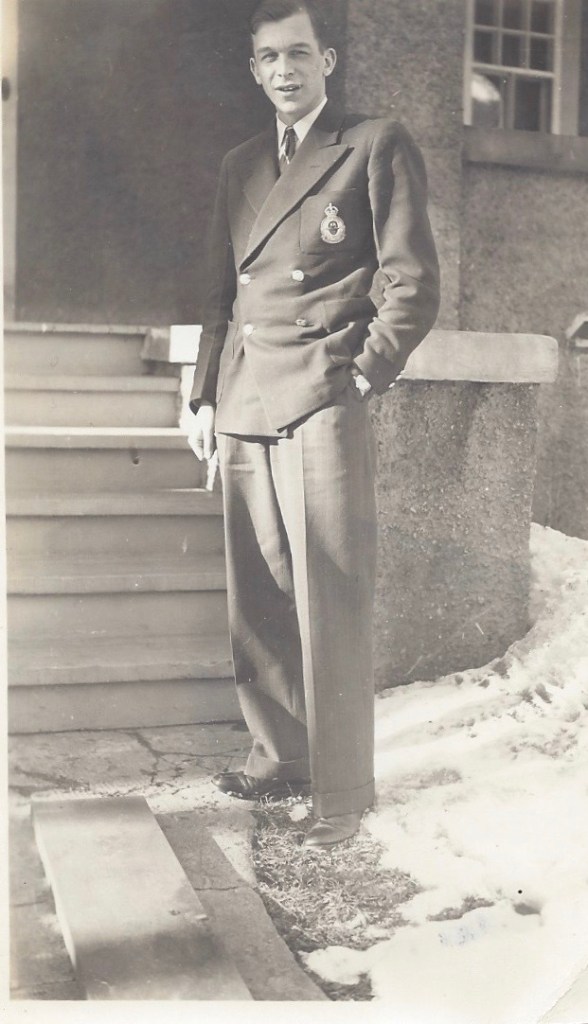
David Hanchet b. April 28th 1920.
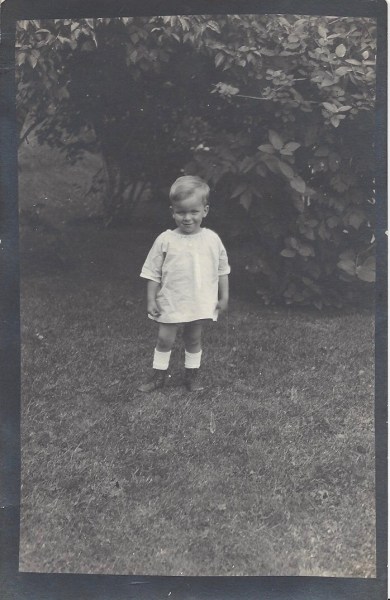
David Hanchet 1922 age 2.
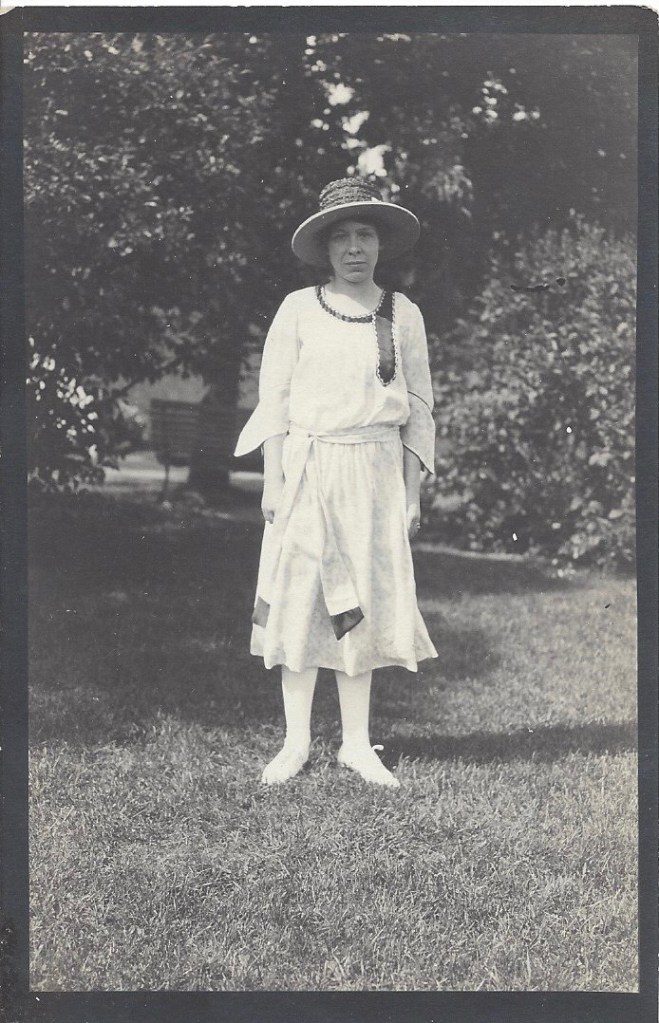
Gladys Hanchet 1920.
War is over.
A tour of the city where David Hanchet was born in the year of his birth.

Commitment

Everybody is competing for your time: Friends are posting their creative endeavours looking for validation; Social media posts bits of sensational news to hold your attention; advertisers; silly memes; rants; quizzes and lists to do or ignore. We tend to commit to the things that take the least amount of our most precious resources. Time and thought.

To read a poem takes about a minute. To glance at a photo or a painting can take seconds. We go scrolling through life, eyes ricochet off pixels. Some articles catching our fancy and we take some minutes to read, maybe respond. Click, click. Like. I agree….

All art takes time to create, but a film, a play, a book, a record album, a painting, a photograph should all take a considerable amount time to experience and reflect upon.

Commitment.

Recently, a number of my friends have been posting their ten essential albums, or books or films. Supposed to not explain. Why not? When someone tells me they love something, I want to know why.  

I love seeing familiar album covers. I enjoy my memories of the album and I enjoy the connection made with the friend via this album. Often it guides me to listen to something I haven’t heard in years. Sometimes I seek out an album that is unfamiliar to me to see if it helps in my connection or understanding of the person who has put it in their top ten. Commitment. Time and thought again.

I listen to a lot of music in a day. I spend a great deal of my time learning, practicing, composing and recording music, and I also enjoy sitting still and listening to music to match my mood, or alter my mood. It can be as diverse as Tower of Power to Keith Jarrett to a Muddy Waters and beyond. I don’t do Spotify. I like to choose.

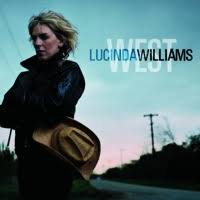
In 2007 I took a chance on the CD “West” by Lucinda Williams(whose music I did not know) because Bill Frisell was a guest contributor on the record, and I love his guitar work. I am not sure if I was aware at the time that Hal Willner had produced it, although I was very aware of many of his compilations Kurt Weill and Thelonious Monk) and the “Night Music” show on TV.

“West” resonated with me. I learned how to play and sing “Everything Has Changed” within days of hearing it for the first time. I am now a lifelong fan. According to my computer I own 14 of Lucinda’s albums for a total of 155 songs. 

Throughout this last week I have been listening intently to “West”. I think I have listened to it six (and a half….fell asleep…won’t count that) times this week. I chose “West” because of something I had read in Bill Frisell’s reminiscences of his friend Hal Willner who had succumbed to the Covid 19 virus last week.

One listen to “West” takes an hour and nine minutes. Six listens is a commitment of nearly seven hours, (not in a row, mind you). When I listen on this level, it is the only conscious thing I am doing. I don’t consider doing housework with music playing to be “listening”. Throughout my teaching career I have tried to install in my students the difference between “hearing” which is passive and “listening” which is active. To Listen is an invisible action verb. 

Sometimes when I listen, I concentrate on one particular facet of the recording such as the guitar interplay; (Frisell and Doug Pettibone) or the drum sound;(Jim Keltner) or the lyrics…. or the stereo mix.

Sometimes it is merely for pleasure. My mind shuts down my own static and I absorb the gestalt of the artistic statement through my ears.

If you have read this far, you made a commitment. Thank you. I encourage active listening, reading and the parceling of time to truly appreciate works of beauty that deserve to be heard.

What Do You Know?

Acutely or peripherally?

I don’t think that any one person can know everything. Most knowledge is peripheral, that is why we seek out specialists. Some of us are lucky enough or mindful enough to have acute knowledge on topics that interest us and bring us joy and satisfaction. 

I have peripheral knowledge on most subjects. Layman’s knowledge. I sorta know how cooking works, automobiles, basic tools, electricity, plumbing. I know the basic belief systems of all the major religions, understand the workings of several layers of government from several different nations. I can hold my own at most social gatherings and appear knowledgeable and able to form opinions on many topics. I, like many others can live with peripheral knowledge because I have tools to research and I know how to get resources pertinent to any subject I may be curious about. I also know who not to consult.

Some people have acute knowledge on a specific subject like I have with music. I know a lot, but there are huge gaps. Some of the musicians I play with know music that I have only heard of. For example, I have never knowingly listened to Iron Maiden or Kiss. I am continually learning new things about music to expand my horizons, but, alas, there is only so much one can stuff in one’s head and my interest is narrowly tapered. I have peripheral knowledge of opera, twelve tone composition and punk rock. Even subjects I am well-versed in like Jazz and R&B and folk-rock and Bob Dylan are not exhaustive. I know more than most, but less than some. 

I saw a tee shirt in a tourist trap in Chinatown that said “I don’t need Google, my wife knows everything” (there was another that said “husband”) which is kind of funny in a passive aggressive way. I used to say of my friend Danny that I didn’t need Google because I had Danny. He could talk in depth on a plethora of subjects as unrelated as “fractals” and “organic farming” and “taxi licenses” or “water pumps”. I was locked in a bathroom once, as the handle had a malfunction. I really could not figure it out, so I phoned him up and he McGyvered me out of the situation. Useful practical knowledge about everyday things and general physics and tools and then silly amazing pockets of knowledge about bizarre phenomena are part of what made talking to Danny a delight. Danny is no more, so Google is a useful if not as loveable resource. 

I read recently in “The New Yorker” a story that made reference to Jane Eyre. I asked Sharon if she had read Jane Eyre , and she responded “anybody who is a reader has read it” but I am a reader, and I don’t think I ever did. It might be a gender related experience. 

I often hear from students the phrase “oh, I know that” or “I’ve seen that” and if I press them about it, ask what it is about, or to describe it. It usually is the case that they may have heard or seen it peripherally and don’t really “know” it. Mere exposure to something does not make one more knowledgeable.

When I was in grade 4, it was discovered after a series of tests that I had dyslexia. My mum looked into resources to help me, and I went to see a Dr. Kirschner who was a specialist. I had to do many exercises that involved eye-hand co-ordination such as swatting a rubber ball suspended from the ceiling on an elastic string and walking along a rail among others. The most important homework he gave me, though, was to “notice everyday things”

People who go on walks with me or who are passengers in my car know that I am not exactly a “point A to point B” person. I will not stop noticing things and revelling in their existence. I can’t pass a blossoming tree without sniffing the flowers. I enjoy interesting buildings, rocks, trees,and abandoned spaces. I prefer driving a country road to the highway. I love old cars. I love used record stores and flea markets. I prefer to shop in small stores rather than mega superstores. 

I try to be acute and in the moment. To fully experience what is here today. One day, before I had kids (pre-k…or “j” as I call it) I was in Smith’s Cove, Nova Scotia at the 9 bedroom “cottage” which was the family cottage of my first wife. I woke up to the sound of surf, seagulls, and Beethoven being played live on the piano. It was an exquisite moment and I went into the kitchen to make a coffee and intended to sit on the porch in the sun and watch the dew evaporate to the sound of Beethoven. In the kitchen was a guest of my brother-in-law with headphones on listening to heavy metal while he coloured in panes for a comic book he was hired to put out. The juxtaposition of my world views\ and his at this point was so clear to me. Why anyone would choose to block out the Beethoven and sit inside under a fluorescent light rather than enjoy the glory of the morning was beyond me.  

Learning and transcribing other people’s music is a great example of listening acutely. Sometimes a song I want to learn and may have heard dozens if not hundreds of times reveals a twist or hook that is beyond what a casual listener would be able to discern. Maybe a diminished chord mistaken for something else. I love music that has chords with notes in the bass other than the root. G/A for example has the 9th degree as the bass tone. D/F# is another common type of chord especially in singer/songwriter music. Sometimes a chord can be interpreted several ways depending on where it leads and where it comes from. Sometimes it defies description. When I learned “You’re a big Girl Now” by Bob Dylan, the D/F# that leads to the  B minor chord where the singing starts struck me as particularly interesting and kind of jarring, but perfect. Usually a chord before a Bmi would be an F#7 or an f# minor or perhaps a diminished chord. None of those could possibly be as effective as the one Dylan ultimately chose. A similar thing happened to me where I tried to pick up the chords to a song made more famous by the Beatles “Til There Was You” I was doing great just from memory until I was temporarily stymied by  a faulty memory. The chord I was missing was a Bb minor that came after a G minor….I heard other things that weren’t quite right….the obvious C7 after G minor……my memory could not retrieve this little morsel until the person who had asked me to learn it to play with him said “Bb minor” and again, it was perfect. Not an obvious choice. I love puzzles like this. 

I also listen to music for pleasure. I am not always analyzing the piece or trying to understand the lyrics, or counting measures. Sometimes the joy of listening without understanding is immensely enjoyable. I recently put on a J.J. Cale record that I am less familiar with and it took me into feelings and thoughts that ultimately led to these musings. I was not actively listening so much as just passively hearing while resting and the feelings were subliminal. I am only recognizing them in retrospect.

I am one of the lucky ones freed from Plato’s cave. Well, What do you know?

Some Other Time

In this time of self-isolating, I have been reaching out to the tendrils of my extended family. Last night I spoke with my older brother Guy. When I reminded him that March 17, was the day our dad died, he told me he had had a conversation with someone just this week and he mentioned the song that I played at Dad’s funeral.

Some Other Time is from the Broadway musical “On The Town”. It is sung by several different characters (sailors and girls) on stage as they lament the fact that the sailors are in town for one day and have to report back to the ship at day’s end.

Guy said that if you heard the song from the soundtrack, it might be easy to escape the poignancy and potency of the song. He was extolling the virtues of my version to his friend and told me it offered such comfort to my mum at the time.

Understand that I seldom get such kind words from my brother who I always looked up to as a child and continuing into the present. I was the little brother who broke his model airplanes, dipped in to his coin collection and as younger brothers can be, was a hero worshipping pest. I even picked up French Horn in imitation of him and rode a motorcycle for a time like he did. His words mean so much to me I decided to record it today.

I discovered the song when I was going through a Bill Evans phase. Bill Evans is (was) a beautiful interpreter of standard repertoire and a brilliant composer and pianist. I was hesitant to pick up the Tony Bennett/Bill Evans record because I associated Tony Bennett with Bel Canto singing (loud and emotive..to my ears “over the top” and corny) I was right to pick up the album and wrong in my assessment of his singing. I still prefer Sinatra, Ella, Sarah, Chet Baker, but Tony and Bill had a remarkable and unmistakable intimacy. Bill brought out the tenderness in Tony that I can now hear in subsequent music of his that I have purchased.

It’s a bit unfair to compare. Guitars have only six strings and a piano has 88 keys and even though both a guitarist and pianist (most of them anyway) have ten fingers. In so many ways the piano has a wider palette not to mention a sustain pedal. In any case, I transcribed the essentials of Bill’s interpretation to my use and learned the lyrics as well.

I have attempted to record “Some Other Time” several other times, and there was always something “off”. Maybe too fast, maybe a string out of tune, voice not up to par, a misplaced lyric…. etc. Oh well… we’ll get it some other time….

There is a good live duet performance by me and Alto legend Dave Turner somewhere on the internet.

Today’s performance was OK except at the very end I had to cut off the sustain of my excellent instrument (Greenfield GF) because one of the dogs decided to go downstairs and the sound of his nails annoyed me. I edited out the F bomb at the end, but left some of my scowl. I bet that never happened to Tony and Bill.

Just as this year is memorable for the Coronavirus, St. Patrick’s Day in 2002 is seared into my memory like it was yesterday. I am Including a link to that story here: https://vignettesandbagatelles.blog/?s=St.+Patrick%27s+Day

I Don’t Want To Wear A Hat

I met up several years ago with my good friend Terry to catch up and just enjoy each other’s company over a cup of tea. As we settled in to our seats he asked me how things were going? At the time my life was seemingly spinning out of control. I had a mother who was fading away and who lived several hours away. I had a teenage daughter who was struggling with life, another teenage daughter who wasn’t, but felt neglected. My job was stressful, and my boss was Narcissistic. My marriage was straining (actually failing) and my art was suffering. I said; “I wake up and put on my Dad hat, I drive to work and put on my teacher hat, I come home and put on my husband hat, there were many more hats, but you get the idea. He said “Sounds like you are wearing too many hats!” which was true. He then asked “How are your migraines?” to which I replied “Worse than ever!”. He said “Maybe you should take off a few of those hats!”. He was right, of course.

The thing is, we wear hats to define ourselves. Nothing says “British Banker” more than a Bowler. Cowboy hat on a musician means you aren’t listening to Jazz. A beret means you are artsy (or a fascist). Work hats are obvious. A uniform. We often wear hats just to fancy ourselves up. Hats are an accessory that people notice first (unless maybe you have no nose, are green, or naked). Just the other day someone asked me “Which one is Ted?” and I said “the guy with the Peaky Binders Hat”. I didn’t have to describe any further. Some hats we put on out of necessity like a helmet or a toque to protect ourselves. I have noticed that many people who are balding or bald wear hats to lower the glare or to frame their face.

The good thing about most bald men that I know is they have nice shaped heads. Baldness suits them. My head is a block. If I were bald, they’d get out the pitchforks and torches and I would scare little children. I have a full head of hair which is nature’s way of protecting the aesthetic of the environment. My head is also very large (I was going to say “huge”, but that might be an exaggeration). My chiropractor was working on my head and remarked: “Ian, this is the biggest head I’ve ever worked on!” I replied “There goes my self esteem!”

I wrote this song shortly after my visit with Terry. It came out in one fell swoop. Plopped in my lap fully formed. I was quite pleased to have written something that sounded so balanced and catchy with so little effort. I performed it as early as July 2008 at The Yellow Door and another engagement in January 2009. Then I sorta shelved it because everything in my life came to a head and music became secondary to survival. I recorded a demo of it at home in 2010 (the xylophone sound is an Orff instrument I had borrowed from the school I was working at)) and I always intended to re-record it and put it out on an album. I returned to it last week and listened. I decided to master it on-line to see what that might produce. Lo and behold, I am very pleased with the result. The guitar and voice have a presence I was unable to access in my home studio.

Seeing as almost no-one buys music anymore, I thought I should let this song go. It is worthy of being heard. Best way is going to be a video. I asked some friends to submit some goofy shots. Here it is.

The greatest hat I ever wore
Kept my four corners warm
Sheltered me from every storm
Man, I miss that hat!

Some hats are too loose
Some hats fit too tight
Some hats I get to choose
But nothing seems to fit right

I don’t want to wear a hat
The ceiling’s low and my head’s too fat

I wear a hat when I go to work
Another when I get home
I wear a hat when I’m out with friends
I even wear one when I’m alone

I can’t remember when my head was bare
Since I was young, there’s always been something there
Always on the go, always on the do
Always trying to try on something new

(chorus)

When you wear a hat it’s hard to dream
If you’re a dreamer your head will be splitting at the seam
Cause if your head’s too big like mine is
A hat’ll just confine this

If I gotta wear one, make it fit
Not just my head, but what’s in it
If I gotta wear one, make it cool
I’m tired of changing hats like a fool

(chorus)

In god’s house I try to keep my head bare
But prayer caps and doer caps keep slipping up there
I wish I didn’t care
What hat I wear when people stare

(chorus)
I think it’s pretty unfair
I just want to feel the wind in my hair

Empty Rooms

Revisiting troubled times is always fraught with danger. All of the “what if”‘s and “could have been”s return to the conscience. A home is a place to alter to your tastes and fill with familiar objects and keepsakes that provide comfort. Today I was finally getting around to some of my music that had been neglected if not downright forgotten and I rediscovered “Empty Rooms” and remembered the walk through video (at the end of the blog) I took of our sold house the day before the possession date. Shattered dreams and failure overshadowing the happy times and the delight of raising two wonderful children. But, to quote the Bacharach/David song, “a house is not a home”.

The music started out (I am not sure of the year) as just a guitar piece on electric guitar using a volume pedal to eliminate the attack of each note and/or swell the chords (with Norwegian drummer Jon Christensen on cymbals). I still intend to record it that way some day.

I do remember that I was very inspired after seeing an Art exhibit by Brian Eno at the “Galerie Lavelin” in Montreal called “The Quiet Room”. The article below describes the exhibit very eloquently and saves me the trouble of doing so as well. https://beta.theglobeandmail.com/arts/brian-enos-quiet-revolution/article1117765/ Funny how in my mind the exhibit was called “Empty Rooms”, but I digress.

The poem came to me in the dark one night several years later while I was laying emotionally wounded on the wooden floor (visible in the video) and wondering what on earth I could do or should do about my seemingly impossible situation. It is not easy living on a volcano. I picked up the guitar and the song fell in place, distracting me from my misery.

I have recorded it several times, never quite satisfied with the result, and shelved it. My life now is vastly different from those times, so I never felt the need to express this pain anymore. Today, though, as I mixed and mastered, I finally heard it the way I wanted it so I added all of the ingredients together to make this little video. I hope it may be of some comfort to someone out there to recognize that there is light and shared experience beyond the bleakness.

The song
The walk through

The Forgotten

I wrote down the words “The forgotten” from a feeling I had while we were visiting a person we know who is having some difficulties and is at the Douglas Hospital in Verdun for observation and treatment. My intention was to write a poem about this feeling.

It was a particularly desolate winter evening. The meandering route to the poorly lit, windswept and empty parking lot was long and foreboding, forlorn and barren. The buildings that comprise the hospital were particularly dark and gloomy that night and loomed before us like a lonely forgotten castle. There was nothing welcoming about it.

I know hospitals are necessary, and are wonderful places where massive effort is put into healing. I know that there can be drama and fear as well as joy and sadness. I was only able to recall negative and depressing details from my hospital experiences that night: My father’s death bed in St. Agathe, my two weeks in isolation at the Royal Vic.as a three year old, my last visit with a dear friend who was dying of cancer and was half his adult weight when I last saw him. My mother failing and her intellect shrinking with every weekly visit for several years. Visiting my close friend Danny who kept living and defying death even with the most gruesome and insurmountable health issues. He lived, until he didn’t, but that wasn’t a hospital story. I remembered my own lonely and prolonged stay in hospital as a teen-ager. All of this burden at once as we approached the entrance. Not optimistic. The corridors may not have been dark, but my thoughts were.

As can be expected, the person we were visiting was disoriented and showed little or no affect. That is why she was there, after all. It was very sad. The “common room” where patients could receive visitors or pass time was almost empty and it’s few occupants had very little in common. Not the kind of place to meet and make friends. I noticed the clock had stopped. 3:47…..who knows how long ago? There were random(probably donated) books on shelves. Probably never been read by their previous owner nor by anyone at the hospital. They were books, though. It was then that I wrote “the forgotten” on my notepad. I thought I would come back to it and write something sad and profound about how these souls were languishing or some such nonsense. Something to match my mood.

Subsequent visits were equally gloomy, although there was more action, some medical personnel and the occasional visitor.

Today was different. We met Lucien. He was a spry old fellow wearing a toque and he went over to the piano and played a few ascending chords very lightly. He turned around and I made eye contact and I said “bravo” He sauntered over to us and told us his story about having been a patient and how he returns to volunteer and help people as he was helped. He had lost his wife of 50 years and fell into a depression. The hospital helped him deal with his dark thoughts, got him some laser surgery for his eyesight “I’m eighty, but I can see like I am twenty-four” he exclaimed cheerily. “No pills!” he added. He was delightful, thankful and graceful and encouraged any within his sphere to join him in the sunshine room tomorrow, or any day, for that matter. A hero. He had a companion with him who he had met and befriended when both were patients. They both went off to visit another room and it was clear that they had left a spark in the “common room”.

I was hesitant to walk over to the piano, but my wife encouraged me. I went and played a few chords and then seeing as no-one told me to shut up I sat down and played in earnest. I played some chords and melodies of songs I vaguely knew and was going to stop, but the room started to fill with the curious, and , it turns out, the appreciative. A woman patient said to me “N’arret pas madame” and burst out laughing when I turned around. She had assumed that with my long hair I must be female. The beard tipped her off. I sang “Golden Slumbers”, and “Caledonia” to an ever expanding and appreciative crowd. Even the nurse gave me a thumbs up.  I only took my exit when I saw someone about to make a phone call. We had to go as our parking was up.

I realized then that it was I that had “forgotten” that my skill with music can be a bridge. My fear and loathing was lifted and the room had more air and people were smiling and talking to one another. It was finally a Common room. There was joy that was lasting and abounding. I think I know how I will give back after I retire. Merci Lucien.

Buttery Moon

I was going to watch my first born daughter (Ema Jean) launch her second CD (Room for Fascination) the other night and the moonrise on our way to the venue was spectacular. Sharon observed “look at the buttery moon!” which, in itself is a miracle because I am usually the one that points out celestial events to her. I looked at the moon and it was indeed buttery in at least two ways. The first way that I observed was a shininess, a shimmer on the almost perfectly round orb. The second sense was that it looked like a pat of butter. Not the square ones, but the round ones you might get at a higher scale restaurant. I loved the phrase. I like the rhythm of it and the fluttery, buttery, come whatery of it.

The evening was a stunning success. The concept for the album about her journey through some trials and tribulations and the execution of the music were inspired and inspiring.

Ema Jean emerging from her Chrysalis

You can hear and purchase Ema Jean’s music here: https://emajean.bandcamp.com/album/room-for-fascination

My daughter’s voice was indeed “buttery” in the sense of smooth and slippery and also in the sense that almost everything is better with butter.

I was determined to write a song called “Buttery Moon” and I picked up my guitar and the first chords that came out were Ami to Fma7 which is a favourite progression of mine and of two of my songwriting heroes (Bob Dylan and Neil Young). It is OK to trust that almost all chord progressions and melodies have been discovered before, yet can seem fresh and new like a newly built house that has the same design as the neighbour’s but has the individual tastes and decorations of home. Then the first verse spilled out in one splash. I went to bed with the wheels spinning about where to go next. Nada except lack of rest….

The next day I was sitting with my coffee and watching the action around our bird feeders in the backyard and I was struck by the simplicity and wonder of our natural world. A poem came out that fit the other song…Buttery Moon. How to reconcile this? abandon the first? store them separately in the notebook?

I took the dogs for a walk in the park and caught a snowflake on my tongue which reminded me of walking another dog in another park at another time late at night and another verse was born.

I realized that the three seemingly disparate songs were related somehow as they all came out of my imagination, but could not reconcile that they evoked three separate experiences and there were jumps in time of day and weather…. then I realized that they all did belong together as they all reflect gratitude:My daughter and her music (which was positive and thought provoking), The indoor and outdoor birds that bring me joy and peace while they go around just being birds, and finally, the sounds at night walking in the cold city in a Canadian winter. So many things in there: Family, wife, nature, sound, music, exercise.. all gratefully brought together under the Buttery Moon.

p

My baby sang out last night from her Chrysalis

(E)merging from the shrouds of clouds like a buttery moon

glowing over the darkest nights of dissonance

Shining healing light on ancient wounds

buttery moon, buttery moon

buttery moon, buttery moon

shining healing light 

on ancient wounds

on ancient wounds

(There were a) dozen different birds out back today grazing on seeds

(in the) blowing snow they know where to go to fulfill their needs

bless their little souls they don’t complain

in the snow, sleet, hail or the driving rain

the driving rain, the driving rain

driving rain, driving rain

cleansing, washing away

residual pain

residual pain

(catching) snowflakes on my tongue in the cool crisp air 

(there may be) better places on this earth, but I don’t know where

(I hear a) rebound off the boards at the rink across the way

someone letting off steam at the and of the day

the end of the day, end of the day

end of the day, finding my way under the buttery moon 

buttery moon, buttery moon

buttery moon, buttery moon

shining healing light 

on ancient wounds

buttery moon

“Levesqueing”

I never noticed before,  but my father-in-law combs his hair forward and slicks it down. Due, I suppose, to his attempt at minimizing the effect of his ever encroaching forehead. Looks sort of like Caesar (or at least, Graham Chapman who played Caesar in “The Life of Brian”) or the British director Lindsay Anderson. It got me to thinking about baldness. More specifically, the disappearance of the “combover”. I wonder when the last time was that I saw someone “Levesque” their hair. 

Is “Levesque” even a verb? To “Levesque” one’s hair is to grow one side of fringe that can be combed over to meet the other side. Named affectionately (or not) after a former chain-smoking Premier of Quebec whose combover was quite evident. Defining, in fact.

My friend Allan has what he refers to as “Bozo wings” when he lets his fringe grow too long. Another friend John is mor Icabod. Picture the actor Christopher Lloyd as Dr. Emmett Brown in “Back to the Future”. 

Many of my friends just shave their whole head at the first sign of “male pattern baldness” which disguises their age somewhat in that it makes them look tougher, younger, smarter. One friend with a “chrome dome” looks sort of like Daddy Warbucks another like Kojak and yet another friend looks like Yul Brynner. I think the shaved head looks best.

My ex-friend “Dan” lost his hair in his early twenties and he was quite uptight about it at the time because he was a musician and thought he needed hair for it. My friend David (who I have never known with hair) put a female wig on at Hallowe’en and it really did transform him. His face now framed with blonde tresses made him look like someone else entirely

I am into my 60’s and have a full head of hair still. A bit of grey, but not pushing it. I don’t know how my hairless friends feel about being bald. Some have said “you’re lucky” to have a full head of hair implying somehow that they are less lucky. I always point out that my head is this huge square block that if shaven would scare kids…Every bald guy I know has a round head, and baldness in their case is not the aesthetic disaster it would be in mine 

One thing for sure, and I suppose the reason for this essay is that I am glad I never had to “Levesque” my hair.