The Visit (Up To You)

I like to refer to sudden inspiration as “The Visit”. When I get visited I try to be welcoming and open even when the visit comes at an inappropriate time (4a.m.) or place…driving…on the bog…. 

I am fortunate to be in tune with these visits from the ether. If I ignore the visitors, they do go away and take their gifts with them. I enjoy my solitude, but I don’t ignore them anymore. I write or record the inspiration as it comes and drop whatever else I am doing.

Obviously with not much taking place during the pandemic lockdown, I have the time and space to do so. I was visited by this particular chord sequence in a chunk…. the lyrics flowed after I improvised the first line. The visit was short and sweet and yielded the  following song:

may 21, 2020.
Sometimes you get the visit 
Sometimes you don’t 
Sometimes it’s exquisite
up to you If you will or if you won’t

some things you can prepare for
Other things are beyond our control
The secret is in how you handle it
up to you to hold or drop the ball
How many times were we too tired
Missing out by not looking up
Wasting time preaching to the choir
Dragging our feet and running Out of luck
Some days are not what they seem
You think you’re awake, but it’s a dream
Some paths are just so obvious
up to you If you’re doing or being

Broken

She was a delicate, sentient child. I liked her. She had ideas and questions and interests well beyond her years. An engaged child among ball chasers, cliques, gossip mongers and acrimonious whiners and tattletales.. Her heart had been battered and bruised by the cruelty of not being “one of” of not being the “same as”. She had entered our school in second or third grade after many of the bonds among children had already taken hold. She had come from overseas. Over the same ocean that the grandparents of her tormentors had traversed. Just not from the same country of origin.

She devoured books and was teased for it. She wore clothing that matched. She wore ribbons in her jet black hair accenting a Snow White kind of beauty. She liked classical music on the radio.

Her mother was very protective. The little girl was not allowed to be photographed, was not allowed on school outings and was not permitted to be on stage for any kind of presentations. The mother somehow believed her child had a rare beauty that would (not might) attract kidnappers. This maternal attention I am sure contributed to the torrents of teasing that she endured.

She adhered to the teacher on duty at recess. She knew that harm would not befall her in our shadow. It was at recess that I got to know this child beyond what we experienced in the classroom. She spoke of her habits and desires and provided stimulating conversation beyond her years. One particular recess in the spring, just before her graduation stands out in my memory. She was walking beside me in her stylish red matching rain gear and red boots. I asked her if she had chosen a high school yet. She lit up and exclaimed that she had passed an entrance exam to an exclusive French all-girls private school that favoured students like her: Studious, cultured, inquisitive, eager to learn. None of the kids at our school ever went there. She said to me: “monsieur, I will be so happy to leave behind these bad memories and start brand new with maybe some new friends and a clean start.” I wished her well, and I was thankful we had had that conversation. I felt relieved that at least someone and something was going right.

Not being allowed on stage, the child missed her graduation ceremony, but I am pretty sure she was relieved to not have to attend the “Grad party”. She sought me out on her last day as everyone was emptying their lockers and gathering their stuff for the last time. She gave me a little card and thanked me for teaching her and for being understanding. I remember wishing her well and asking her to let me know through her younger brother how things were going at her new school.

In August of that year after a well deserved summer break I was issued my new class lists and I noticed that her brother was not on there. I asked about it and was told “Oh, haven’t you heard?” I replied in the negative. Her brother was not coming anymore. The family had split and he was now in another district. It is always tragic to hear about families breaking. I asked “What about his sister?” I am very low on the totem pole when it comes to news,

“She died this summer!”

She had gone to La Ronde with her brother and was on the roller coaster when she fainted and had to have emergency services called for her. They went to the hospital and ran tests and found a hitherto undiagnosed heart anomily. The little girl was given some follow up appointments, maybe some meds and was told to take it easy.

Several days later she was swimming in their backyard pool and had a heart attack. Her non-swimmer brother witnessed it helplessly calling out frantically but unable to reach her. She drowned.

Her little heart gave out. They said it was a congenital defect, but I knew differently. I knew that it had already been weakened and broken hundreds of times. My heart broke a little when I heard the news.

The spiral downward for their family was swift….differing ways to grieve and the brother probably confused as hell. The cracks in the family may have already been there. I don’t know.

My little friend never got the second chance she so desperately wanted. She was never kidnapped either. I swore I would never forget this child nor the profundity of this story.

I was recounting a little of this tale to my daughter recently. She had asked me if I had ever lost a student to death. I was telling her in detail but I was horrified that I could not recall this child’s name. This child I swore I’d never forget.

Angry with myself and a little disappointed in my fading mental acuity, I went over all the clues I could fathom. I remembered her brother’s name. It was unusual {as was hers). In my lengthy career these were unique monikers that I thought I could never forget. I messaged my friend (a colleague) who was teaching at the same school at that same time. She had a vague recollection and had to use her “sources”. I remembered the face, the clothing, the oddness of the name. I finally wrote “it sounds like…..” and we both got the flash. It is not necessary to name her for this story, nor is it ethical to write it. I have it in my notes.

Her little heart gave out. It just broke. She might have had a chance if she had been kidnapped.


The Impact Of Certain Ballads 4

#4

Painted a From Memory

Poetry is cool, but lyrics can be divine. This is an example of such. The words evoke a longing for something that was and now won’t ever be, and worse than that she smiles for someone else. Nuclear fallout. The words standing alone are beautiful, but coupled with the unhurried melody and arrangement it is divine.

This ballad is an exquisite and unlikely collaboration between pop songwriter Burt Bacharach and super punk Elvis Costello. I first heard a Elvis sing it on the album by the same name. There is no clear indication of who did what as in a Rodgers and Hammerstein song, though the melody is probably mostly Bacharach’s and the lyric mostly Costello’s. 

The mind does tricks and time fades our memory. The premise of the song is an artist staring at a portrait of a once beloved and musing on how accurate it might be. “Those eyes I tried to capture, they are lost to me now forever, they smile for someone …else”. 

I love Elvis’ original as well as an exquisite “cover” by Cassandra Wilson and Bill Frisell which is worth seeking out. I transcribed the second version so I can play it and Bill’s chords sit easier on the guitar. What a difference a semi-tone makes (from Db to C). Cassandra personalized it from she to he to reflect her gender and Bill’s playing is gorgeous. His use of space and sustain and his pedal modified tone support the tragedy of this little known gem. This live version of Elvis and Burt is also awesome.

#3

Bill Evans was one of the greatest interpreters of a ballad ever. I have chosen this performance of “Sometime Ago” (a waltz by Sergio Mihanovich taken from an exquisite 1977 album “You Must Believe In Spring”) as much for the beautiful melody as for this fluid arrangement for trio. Bill plays solo for the first statement of the theme. He pushes and pulls the melody in and out of time until Eddie Gomez enters with beautiful harmonics which are the perfect counterpoint to Bill’s delicate exposition of the theme they continue to play with the time until Elliot Zigmund comes in on the drums and the improvising starts and the seamless interplay of a working trio at the top of their game. Even the bass solo is inventive and musical. I always enjoy the way Gomez’ bass is amplified as it makes his presence known as well as felt. His asides and commentary to Bill are to me as integral as anything else this song has to offer. The modal outro over the repeating two chord theme are reminiscent of Bill’s playing on Peace Piece. 

#2

First Song (for Ruth)

I have many different recordings of this song (written by the great American bassist Charlie Haden). I am fond of them all. I first heard it by Quartet West with Charlie Haden, I have heard it played by many others as well, Pat Metheny, David Sanborn, Jim Hall, Laurence Hobgood and Abbey Lincoln who wrote lyrics to it. The heaviest version by far is a duet with Kenny Barron on piano and Stan Getz on Tenor Sax. 

Stan Getz was very ill. Three months away from succumbing to cancer and he had to take long breaks and I believe he may have even had to take oxygen between tunes. His playing is plaintive and his breath laboured, and he infuses every note of his performance with dignity and passion. Aside from it being a sort of swan song for Stan, he knew Ruth and Charlie personally. Ruth was married to Haden. Every note has a poignancy, a statement of desire for life and a reaffirmation of the beauty of music.

I transcribed this song about twenty years ago which has (as you can imagine from a bassist) a wonderful bass line. It is almost hymnal in it’s simplicity and yet the harmonies accompanying the bass line are gorgeous. It is no surprise that lyrical guitarists like Hall and Metheny loved it.

The Impact Of Certain Ballads

#1

Angelicus by Vince Mendoza

This song is glorious and I don’t exactly know why. All of the playing is understated and accessible to non jazz people. The low brass and synthesizers that start off this song blend in a seamless, rich, dramatic fanfare before the sparse and machinelike percussion starts. The theme repeats itself riding over the percussion ostinato and light piano fills. When John Scofield enters on electric guitar and takes up the melody with the restatement of the horns. The piano solo is so melodic. The drum kit and Bass are understated. My favourite part of this song are these little notes that Will Lee throws in on his Bass (at 3:25 on this recording) they are seemingly an improvisation, but recur later leading me to believe that they might have been written. In any case they are perfect. The horns enter with their cinematic swelling and ebbing under the second half of the piano solo. Guitar enters again and there is a marimba sounding synth playing fills as the French horns continue.

I think perhaps the reason why I love this song so much is that through the crafty arrangement Vince Mendoza created a swirling foundation for dreams. I am transported somewhere else each and every time I listen to it. The rest of the album is a bit disappointing, but this one is a gem.

entry #2 coming tomorrow

Centennial

My dad was a pretty good dad. He was above average in many things. He taught his children some very positive values. He introduced and nurtured (among other things) our interest in reading, skiing, nature, music. 

Some things, however, were beyond him. 

I can’t figure out whether he was not effective as a math tutor or whether I was a hopeless student. Perhaps it was a bit of both. 

My father contended that math was “easy”. No opinion here. “Either you know it, or you don’t!” he said. His was a stark world of such absolutisms. A product of the great depression and the second world war, his world view was unquestionable. Poverty-bad. Nazis-bad. He was an aeronautical engineer, and he knew his stuff. He laid out how to solve the problems I was struggling with in tenth grade. It made perfect sense to him, but might as well have been Sanskrit to me. As I reminisce right now, I wonder if I just feigned ignorance hoping that he would solve my problems for me. He solved many many other problems as they arose. I leaned pretty heavily on his example and his advice in most things. No such luck. He expected me to know the rules that governed how to get the “right” answer. All I saw was a bunch of seemingly arbitrary rules that, if followed, gave some other seemingly arbitrary number. The exercise had zero meaning to me. I had to do it because society demands it for high school matriculation. It was like a punch line to a joke that went over my head. 

One of the defences that I cultivated as a kid with dyslexia was to make jokes and absurd statements to deflect from the fear of it being discovered that I’m not as clever as I thought I was. I couldn’t use this diversionary tactic with my father. He knew I was fudging. I quickly depleted his (admittedly small) supply of patience until it deteriorated to the point of us yelling at each other and his ordering me to not leave my room until it was done. He said I could “take your time, but the longer it takes, the more things you will miss.”

He checked in on my progress after a half hour or so. I was miserable. Sensing that he needed a different approach, he thought he’d cheer me up with a relevant story from his experience. He was calm. Probably bolstered by a glass of Sherry. He asked me to guess what his math mark was in University. My dad studied engineering at McGill University (interrupted by WWII).  I guessed wrongly that he got 90. We tried again several more times and I continually guessed wrong. He finally just told me. Not boastfully or bragging, but just matter-of-factly. “100%. Either you know it, or you don’t”. I was incredulous. I had never had 100% in anything. Not even close. The closest thing I ever had to a perfect score was my batting average in little league baseball. I hit .000 which is perfectly dreadful. It is essentially what a dead person could do. I was on a par with corpses. My dad was on a par with the Gods…..

He told me that when he enlisted in the Air Force, they looked at his math scores and wanted to send him to navigator school. My dad refused. He made the case for becoming a pilot and the recruiting officer relented. Dad had argued that “you want the really smart ones controlling the aircraft”.

His pep talk had the reverse effect on me from his intended result. I thought “how could you compete with that?….I give up!” I knew I was smart about a lot of things, but I was entirely prepared to not do math! I would not compete with perfect.

I flunked. Plan F.

I had to repeat math the next year (plan B) as it was still compulsory to matriculate. I could not avoid it. Fortunately my new teacher was Mr. Hayes. He was funny. He was patient, he made math at least bearable. He would stand by the board and flip his chalk while instructing or fielding questions. There was rhythm there. There was humour, there was absurdity. He never once dropped the chalk either. Mr. Hayes motivated me to just do the work and follow the guidelines. 

I am pretty sure Mr. Hayes did not get 100% in math. He probably didn’t get anything close to that in pedagogy either. I don’t know much about him, really. I have thought about him about as infrequently as I have the same math that I have never used.

If my father were still alive today, this would be his 100th birthday. He missed it by 18 years. As much as I miss my father, I am glad he didn’t make it to 100. He would have been insufferable. 

 “100. Either you get there, or you don’t!”

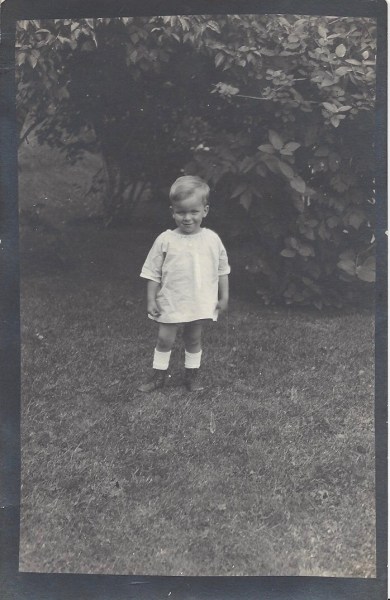
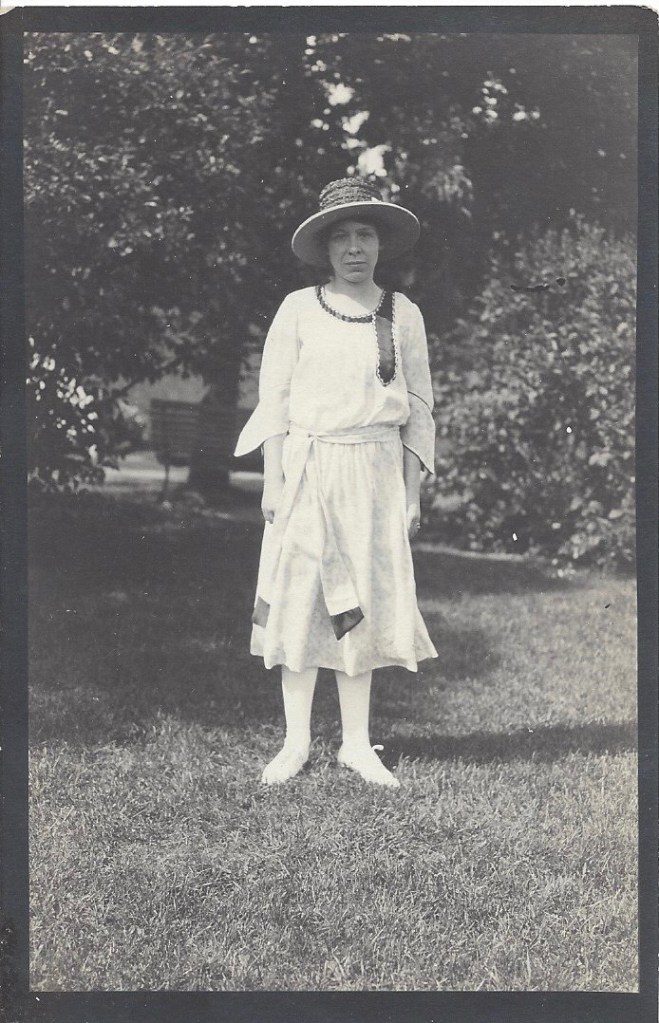
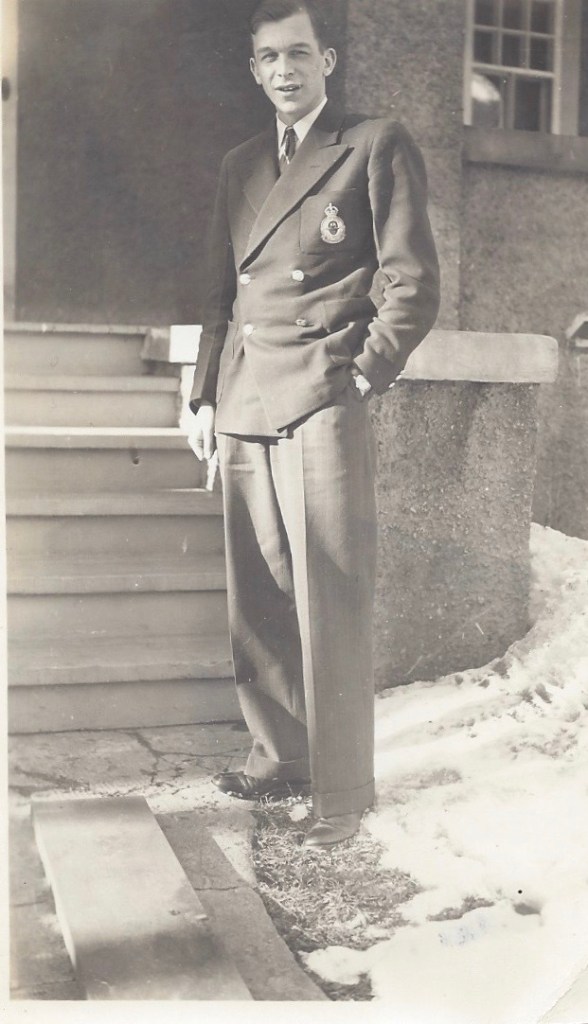
David Hanchet b. April 28th 1920.
David Hanchet 1922 age 2.
Gladys Hanchet 1920.
War is over.
A tour of the city where David Hanchet was born in the year of his birth.

Commitment

Everybody is competing for your time: Friends are posting their creative endeavours looking for validation; Social media posts bits of sensational news to hold your attention; advertisers; silly memes; rants; quizzes and lists to do or ignore. We tend to commit to the things that take the least amount of our most precious resources. Time and thought.

To read a poem takes about a minute. To glance at a photo or a painting can take seconds. We go scrolling through life, eyes ricochet off pixels. Some articles catching our fancy and we take some minutes to read, maybe respond. Click, click. Like. I agree….

All art takes time to create, but a film, a play, a book, a record album, a painting, a photograph should all take a considerable amount time to experience and reflect upon.

Commitment.

Recently, a number of my friends have been posting their ten essential albums, or books or films. Supposed to not explain. Why not? When someone tells me they love something, I want to know why.  

I love seeing familiar album covers. I enjoy my memories of the album and I enjoy the connection made with the friend via this album. Often it guides me to listen to something I haven’t heard in years. Sometimes I seek out an album that is unfamiliar to me to see if it helps in my connection or understanding of the person who has put it in their top ten. Commitment. Time and thought again.

I listen to a lot of music in a day. I spend a great deal of my time learning, practicing, composing and recording music, and I also enjoy sitting still and listening to music to match my mood, or alter my mood. It can be as diverse as Tower of Power to Keith Jarrett to a Muddy Waters and beyond. I don’t do Spotify. I like to choose.

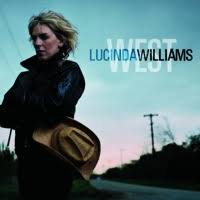
In 2007 I took a chance on the CD “West” by Lucinda Williams(whose music I did not know) because Bill Frisell was a guest contributor on the record, and I love his guitar work. I am not sure if I was aware at the time that Hal Willner had produced it, although I was very aware of many of his compilations Kurt Weill and Thelonious Monk) and the “Night Music” show on TV.

“West” resonated with me. I learned how to play and sing “Everything Has Changed” within days of hearing it for the first time. I am now a lifelong fan. According to my computer I own 14 of Lucinda’s albums for a total of 155 songs. 

Throughout this last week I have been listening intently to “West”. I think I have listened to it six (and a half….fell asleep…won’t count that) times this week. I chose “West” because of something I had read in Bill Frisell’s reminiscences of his friend Hal Willner who had succumbed to the Covid 19 virus last week.

One listen to “West” takes an hour and nine minutes. Six listens is a commitment of nearly seven hours, (not in a row, mind you). When I listen on this level, it is the only conscious thing I am doing. I don’t consider doing housework with music playing to be “listening”. Throughout my teaching career I have tried to install in my students the difference between “hearing” which is passive and “listening” which is active. To Listen is an invisible action verb. 

Sometimes when I listen, I concentrate on one particular facet of the recording such as the guitar interplay; (Frisell and Doug Pettibone) or the drum sound;(Jim Keltner) or the lyrics…. or the stereo mix.

Sometimes it is merely for pleasure. My mind shuts down my own static and I absorb the gestalt of the artistic statement through my ears.

If you have read this far, you made a commitment. Thank you. I encourage active listening, reading and the parceling of time to truly appreciate works of beauty that deserve to be heard.

What Do You Know?

Acutely or peripherally?

I don’t think that any one person can know everything. Most knowledge is peripheral, that is why we seek out specialists. Some of us are lucky enough or mindful enough to have acute knowledge on topics that interest us and bring us joy and satisfaction. 

I have peripheral knowledge on most subjects. Layman’s knowledge. I sorta know how cooking works, automobiles, basic tools, electricity, plumbing. I know the basic belief systems of all the major religions, understand the workings of several layers of government from several different nations. I can hold my own at most social gatherings and appear knowledgeable and able to form opinions on many topics. I, like many others can live with peripheral knowledge because I have tools to research and I know how to get resources pertinent to any subject I may be curious about. I also know who not to consult.

Some people have acute knowledge on a specific subject like I have with music. I know a lot, but there are huge gaps. Some of the musicians I play with know music that I have only heard of. For example, I have never knowingly listened to Iron Maiden or Kiss. I am continually learning new things about music to expand my horizons, but, alas, there is only so much one can stuff in one’s head and my interest is narrowly tapered. I have peripheral knowledge of opera, twelve tone composition and punk rock. Even subjects I am well-versed in like Jazz and R&B and folk-rock and Bob Dylan are not exhaustive. I know more than most, but less than some. 

I saw a tee shirt in a tourist trap in Chinatown that said “I don’t need Google, my wife knows everything” (there was another that said “husband”) which is kind of funny in a passive aggressive way. I used to say of my friend Danny that I didn’t need Google because I had Danny. He could talk in depth on a plethora of subjects as unrelated as “fractals” and “organic farming” and “taxi licenses” or “water pumps”. I was locked in a bathroom once, as the handle had a malfunction. I really could not figure it out, so I phoned him up and he McGyvered me out of the situation. Useful practical knowledge about everyday things and general physics and tools and then silly amazing pockets of knowledge about bizarre phenomena are part of what made talking to Danny a delight. Danny is no more, so Google is a useful if not as loveable resource. 

I read recently in “The New Yorker” a story that made reference to Jane Eyre. I asked Sharon if she had read Jane Eyre , and she responded “anybody who is a reader has read it” but I am a reader, and I don’t think I ever did. It might be a gender related experience. 

I often hear from students the phrase “oh, I know that” or “I’ve seen that” and if I press them about it, ask what it is about, or to describe it. It usually is the case that they may have heard or seen it peripherally and don’t really “know” it. Mere exposure to something does not make one more knowledgeable.

When I was in grade 4, it was discovered after a series of tests that I had dyslexia. My mum looked into resources to help me, and I went to see a Dr. Kirschner who was a specialist. I had to do many exercises that involved eye-hand co-ordination such as swatting a rubber ball suspended from the ceiling on an elastic string and walking along a rail among others. The most important homework he gave me, though, was to “notice everyday things”

People who go on walks with me or who are passengers in my car know that I am not exactly a “point A to point B” person. I will not stop noticing things and revelling in their existence. I can’t pass a blossoming tree without sniffing the flowers. I enjoy interesting buildings, rocks, trees,and abandoned spaces. I prefer driving a country road to the highway. I love old cars. I love used record stores and flea markets. I prefer to shop in small stores rather than mega superstores. 

I try to be acute and in the moment. To fully experience what is here today. One day, before I had kids (pre-k…or “j” as I call it) I was in Smith’s Cove, Nova Scotia at the 9 bedroom “cottage” which was the family cottage of my first wife. I woke up to the sound of surf, seagulls, and Beethoven being played live on the piano. It was an exquisite moment and I went into the kitchen to make a coffee and intended to sit on the porch in the sun and watch the dew evaporate to the sound of Beethoven. In the kitchen was a guest of my brother-in-law with headphones on listening to heavy metal while he coloured in panes for a comic book he was hired to put out. The juxtaposition of my world views\ and his at this point was so clear to me. Why anyone would choose to block out the Beethoven and sit inside under a fluorescent light rather than enjoy the glory of the morning was beyond me.  

Learning and transcribing other people’s music is a great example of listening acutely. Sometimes a song I want to learn and may have heard dozens if not hundreds of times reveals a twist or hook that is beyond what a casual listener would be able to discern. Maybe a diminished chord mistaken for something else. I love music that has chords with notes in the bass other than the root. G/A for example has the 9th degree as the bass tone. D/F# is another common type of chord especially in singer/songwriter music. Sometimes a chord can be interpreted several ways depending on where it leads and where it comes from. Sometimes it defies description. When I learned “You’re a big Girl Now” by Bob Dylan, the D/F# that leads to the  B minor chord where the singing starts struck me as particularly interesting and kind of jarring, but perfect. Usually a chord before a Bmi would be an F#7 or an f# minor or perhaps a diminished chord. None of those could possibly be as effective as the one Dylan ultimately chose. A similar thing happened to me where I tried to pick up the chords to a song made more famous by the Beatles “Til There Was You” I was doing great just from memory until I was temporarily stymied by  a faulty memory. The chord I was missing was a Bb minor that came after a G minor….I heard other things that weren’t quite right….the obvious C7 after G minor……my memory could not retrieve this little morsel until the person who had asked me to learn it to play with him said “Bb minor” and again, it was perfect. Not an obvious choice. I love puzzles like this. 

I also listen to music for pleasure. I am not always analyzing the piece or trying to understand the lyrics, or counting measures. Sometimes the joy of listening without understanding is immensely enjoyable. I recently put on a J.J. Cale record that I am less familiar with and it took me into feelings and thoughts that ultimately led to these musings. I was not actively listening so much as just passively hearing while resting and the feelings were subliminal. I am only recognizing them in retrospect.

I am one of the lucky ones freed from Plato’s cave. Well, What do you know?
Some Other Time

In this time of self-isolating, I have been reaching out to the tendrils of my extended family. Last night I spoke with my older brother Guy. When I reminded him that March 17, was the day our dad died, he told me he had had a conversation with someone just this week and he mentioned the song that I played at Dad’s funeral.

Some Other Time is from the Broadway musical “On The Town”. It is sung by several different characters (sailors and girls) on stage as they lament the fact that the sailors are in town for one day and have to report back to the ship at day’s end.

Guy said that if you heard the song from the soundtrack, it might be easy to escape the poignancy and potency of the song. He was extolling the virtues of my version to his friend and told me it offered such comfort to my mum at the time.

Understand that I seldom get such kind words from my brother who I always looked up to as a child and continuing into the present. I was the little brother who broke his model airplanes, dipped in to his coin collection and as younger brothers can be, was a hero worshipping pest. I even picked up French Horn in imitation of him and rode a motorcycle for a time like he did. His words mean so much to me I decided to record it today.

I discovered the song when I was going through a Bill Evans phase. Bill Evans is (was) a beautiful interpreter of standard repertoire and a brilliant composer and pianist. I was hesitant to pick up the Tony Bennett/Bill Evans record because I associated Tony Bennett with Bel Canto singing (loud and emotive..to my ears “over the top” and corny) I was right to pick up the album and wrong in my assessment of his singing. I still prefer Sinatra, Ella, Sarah, Chet Baker, but Tony and Bill had a remarkable and unmistakable intimacy. Bill brought out the tenderness in Tony that I can now hear in subsequent music of his that I have purchased.

It’s a bit unfair to compare. Guitars have only six strings and a piano has 88 keys and even though both a guitarist and pianist (most of them anyway) have ten fingers. In so many ways the piano has a wider palette not to mention a sustain pedal. In any case, I transcribed the essentials of Bill’s interpretation to my use and learned the lyrics as well.

I have attempted to record “Some Other Time” several other times, and there was always something “off”. Maybe too fast, maybe a string out of tune, voice not up to par, a misplaced lyric…. etc. Oh well… we’ll get it some other time….

There is a good live duet performance by me and Alto legend Dave Turner somewhere on the internet.

Today’s performance was OK except at the very end I had to cut off the sustain of my excellent instrument (Greenfield GF) because one of the dogs decided to go downstairs and the sound of his nails annoyed me. I edited out the F bomb at the end, but left some of my scowl. I bet that never happened to Tony and Bill.

Just as this year is memorable for the Coronavirus, St. Patrick’s Day in 2002 is seared into my memory like it was yesterday. I am Including a link to that story here: https://vignettesandbagatelles.blog/?s=St.+Patrick%27s+Day

I Don’t Want To Wear A Hat

I met up several years ago with my good friend Terry to catch up and just enjoy each other’s company over a cup of tea. As we settled in to our seats he asked me how things were going? At the time my life was seemingly spinning out of control. I had a mother who was fading away and who lived several hours away. I had a teenage daughter who was struggling with life, another teenage daughter who wasn’t, but felt neglected. My job was stressful, and my boss was Narcissistic. My marriage was straining (actually failing) and my art was suffering. I said; “I wake up and put on my Dad hat, I drive to work and put on my teacher hat, I come home and put on my husband hat, there were many more hats, but you get the idea. He said “Sounds like you are wearing too many hats!” which was true. He then asked “How are your migraines?” to which I replied “Worse than ever!”. He said “Maybe you should take off a few of those hats!”. He was right, of course.

The thing is, we wear hats to define ourselves. Nothing says “British Banker” more than a Bowler. Cowboy hat on a musician means you aren’t listening to Jazz. A beret means you are artsy (or a fascist). Work hats are obvious. A uniform. We often wear hats just to fancy ourselves up. Hats are an accessory that people notice first (unless maybe you have no nose, are green, or naked). Just the other day someone asked me “Which one is Ted?” and I said “the guy with the Peaky Binders Hat”. I didn’t have to describe any further. Some hats we put on out of necessity like a helmet or a toque to protect ourselves. I have noticed that many people who are balding or bald wear hats to lower the glare or to frame their face.

The good thing about most bald men that I know is they have nice shaped heads. Baldness suits them. My head is a block. If I were bald, they’d get out the pitchforks and torches and I would scare little children. I have a full head of hair which is nature’s way of protecting the aesthetic of the environment. My head is also very large (I was going to say “huge”, but that might be an exaggeration). My chiropractor was working on my head and remarked: “Ian, this is the biggest head I’ve ever worked on!” I replied “There goes my self esteem!”

I wrote this song shortly after my visit with Terry. It came out in one fell swoop. Plopped in my lap fully formed. I was quite pleased to have written something that sounded so balanced and catchy with so little effort. I performed it as early as July 2008 at The Yellow Door and another engagement in January 2009. Then I sorta shelved it because everything in my life came to a head and music became secondary to survival. I recorded a demo of it at home in 2010 (the xylophone sound is an Orff instrument I had borrowed from the school I was working at)) and I always intended to re-record it and put it out on an album. I returned to it last week and listened. I decided to master it on-line to see what that might produce. Lo and behold, I am very pleased with the result. The guitar and voice have a presence I was unable to access in my home studio.

Seeing as almost no-one buys music anymore, I thought I should let this song go. It is worthy of being heard. Best way is going to be a video. I asked some friends to submit some goofy shots. Here it is.

The greatest hat I ever wore
Kept my four corners warm
Sheltered me from every storm
Man, I miss that hat!

Some hats are too loose
Some hats fit too tight
Some hats I get to choose
But nothing seems to fit right

I don’t want to wear a hat
The ceiling’s low and my head’s too fat

I wear a hat when I go to work
Another when I get home
I wear a hat when I’m out with friends
I even wear one when I’m alone

I can’t remember when my head was bare
Since I was young, there’s always been something there
Always on the go, always on the do
Always trying to try on something new

(chorus)

When you wear a hat it’s hard to dream
If you’re a dreamer your head will be splitting at the seam
Cause if your head’s too big like mine is
A hat’ll just confine this

If I gotta wear one, make it fit
Not just my head, but what’s in it
If I gotta wear one, make it cool
I’m tired of changing hats like a fool

(chorus)

In god’s house I try to keep my head bare
But prayer caps and doer caps keep slipping up there
I wish I didn’t care
What hat I wear when people stare

(chorus)
I think it’s pretty unfair
I just want to feel the wind in my hair