Sometimes writing a song is like opening a present. Unwrap an idea and voila! Other times it’s like baking a cake. measured ingredients and methodology. Often it involves tracing an existing outline and colouring it in. There is no right way. The muse is elusive and unruly…pun intended.
My latest song is more like nurturing a seedling over several weeks. Every day there is a little bit of progress. I wake up in the morning and play what i’ve got so far. It started with a pleasing arpeggio connected to a second arpeggio which i repeated several times. i went on about my daily life and the next day i woke up and played the arpeggios and unconsciously went to a third chord. my brain must’ve been working unconsciously to resolve my progression and figured out where to go next. playing what is now the A section to my song over and over and humming along with ‘ghost’ melodies until the right on fit like an elusive jigsaw piece. When it falls in place it is so satisfying.
On to the next part. The B section is always a contrasting section. i started with a chord that hadn’t been heard yet and followed it with two altered chords that enabled a one note melody. The melody note is a B which is the 11th degree of an F#mi chord I transitioned to a C major 7 chord (maintaining the B in the melody)The B note being the Major 7th. I resolved it down to a B7 chord which means the melody was now the root of the chord. I left it overnight. The next day I resolved the B7 to E minor. Resolution is satisfying! I was now ready to continue. It all seems to fall organically into place. I am just here to catch it.
Two sleeps later I received the brainchild of inverting the order of my first idea and I now have a C section (obviously not a natural birth, this song). AABC eight measures each makes a 32 bar song. Now to just make more than one time through.
I started writing this song on my Martin D28 and I was enjoying the sound and feel of it, but sometimes my fingers got a little in the way. This morning I switched to my Greenfield and the arpeggios were cleaner and the longer notes rang on better due to a slightly wider neck. I didn’t have to think so much about technique and lo and behold some lyrics started to flow. Turns out the song wants to be about injustice and greed. I realize this is all and abstraction to most people, the house is not quiet enough today for me to record what I’ve got so far.
It feels right. I may finish it tomorrow, may take longer. It’ll know when it’s ready.
I love discovering music and musicians that are new to me. This week I stumbled across a video of a song in a style that I really love. My first listen to ‘Another Day Old’ was thrilling. The voice and appearance of this artist snagged me, the topic (aging gracefully) perfect for my age group. The style of mid-sixties Memphis soul is a favourite of mine. all the instruments supporting the song were perfect. I immediately dug a bit deeper to find more about Eddie Dalton (the handsome, fit, singer in the video). I wanted to purchase any albums he may have made.
The web site offered not much besides variations on the video I had just watched. Glossy edgy black and white photography too good to be true MSG for the eyes. My spider sense awoke the seed of doubt in me that what I was watching was unreal. AI. My disappointment could not have been greater. It was like striking gold and finding out it was Iron pyrite (fool’s gold). Needing further info to prove me wrong I sought out more. A Facebook page offered many more songs all in the same style with the same or similar images I had already seen. There was no Wikipedia entry, no biographical detail. This Eddie Dalton appeared on the scene fully formed as an artist. Manufactured.
Part of me is impressed that AI was this advanced that I was initially fooled. I felt like Deckard in Blade Runner running tests to see if a subject is a replicant or not. The other (larger) part of me abhorred this as a betrayal of the quality I admire most in popular music which is authenticity.
I could imagine all the criteria fed into creating this: attractive middle aged soul singer; style of Memphis Soul; cross between Sam Moore; Al Green; Ben E. King; Bill Withers; Charles Bradley; etc. each new criterion sculpting closer to perfection until there was nothing left to refine. The difference is this is not a sculpture of a sculptor created by a sculptor. Nor is this a collage of different elements creating a whole. Maybe it’s like mixing a smoothie by adding ingredients until the desired balance is achieved.
Why?
I recently heard a term that resonated with me. The term is the “attention economy” which covers bums in seats, eyes on screen, time spent, etc. I assume that there are royalties to be collected and money to be made from this song. Attention paid to this fictional singer means that less attention will be paid to other things.
Nothing wrong with fiction per se. I read fiction for diversion and entertainment. The written fiction I have read I assume originated with an author. The author may have a pseudonym or an alias but I believe to my core is a human. Most of my teacher friends have read ‘work’ created artificially that is essentially plagiarism. I have a friend whose workaround for his severe dyslexia is to dictate narrative and edit it using artificial means. His stories do not suffer, in fact they might not have been shared but for this technology. I don’t think he asks the computer to write it for him, he puts in his words and the computer assists in his syntax and spelling, punctuation. If I had not been told, I doubt if I’d know.
I have another friend who paints portraits. I have sat for a portrait and he created a near perfect image of me in several hours. My wife is a photographer who takes my portrait in seconds, sometimes manipulates the image using filters or erases some “noise” or smooths out a zit. Various art forms with different limitations but similar results. Not about the skill, or the effort, it is about being human.
Artifice has always been an element of all the arts. Acting is completely phony. What is the difference?
I am a songwriter. I love creating something that didn’t exist before, but is still recognizable as a song and hopefully is not derivative but complementary to all the music I have heard before. My music is a reflection of my humanity. Most music I love has this quality. Flawed human foibles are the root of songs I admire.
I wanted so much to love Another Day Old as much as I love To Ramona by Bob Dylan or Into The Mystic by Van Morrison. I can’t. What the song has brought to me is an existential disturbance but also a determination to assert my humanity through my art. Be real!
Free advertising for someone who doesn’t actually exist.
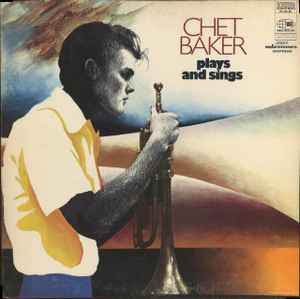
When I had just started listening to Jazz at the age of eighteen or so, I had a very scant record collection. I had a John Coltrane Twofer called Black Pearls; Tom Scott and The LA Express; Erroll Garner ‘Concert By The Sea’ and perhaps a few others. My favourite pastime in those days was crate digging in used record stores. I also checked out any record section anywhere. One day in a Kresge’s or K Mart store in a mall in St.Jerome, Quebec I came across an artist I had never heard of. Chet Baker.
Something about the artwork and the handsome portrait drew me to this record. That, and the price of 69 cents. It was a “cutout”. A hole drilled in the corner and reduced to clear. I took it home and put it on my turntable in my bedroom and listened to each side in turn. I was attracted to the music. All Ballads. Some of the songs I had heard from my dad’s collection. Ella and Sinatra sang But Not For Me, My Funny Valentine, Summertime. I really liked that this was a quartet. Piano, Bass and Drums with Chet either playing trumpet or singing. His sultry androgynous voice delivered each song in a way that immediately connected with my soul. My collection today consists of 39 albums with Chet Baker as the leader(443 songs). Most of the albums are fairly high quality although some were just attempts to cash in for dope money. Chet, famously, was a notorious heroin addict. Even the ones where Chet is not 100 % have some redeeming qualities.
One night this week I was listening to Luciana Souza on her album “The Book Of Chet” which is a beautiful tribute to Chet’s memory and songs from his repertoire that are associated with him. One of those songs is “I Get Along Without You Very Well” by Hoagy Carmichael based on a poem by Jane Brown Thompson. which is a rueful ode to a lost love and the irony inherent in a statement that is untrue. Beautiful capture of a common life event. Luciana sings it well with a slight hint of her Brazilian accent. Her voice is sultry and her phrasing and pitch are excellent, but there was something missing. I went downstairs in the morning and put on Chet singing the song. To me, Chet’s version (from 1954) seems more believable. Chet’s pitch sometimes a bit flat, his frugal use of vibrato only on certain words. He wrenches the mixed emotion evoked in the lyric and tells the story as if it is his. I don’t mean too disparage Luciana. Hers is plaintive, reverent, perfect, professional, well recorded, sublime, in fact, but to me, it only made me desire to hear Chet’s original.
Chet starts off with a celeste intro (Celeste is a bell-piano…rare in jazz… best known for The Dance Of The Sugar Plum Fairy by Tchaikovsky) and Chet sings the first A section as if it is an aside. A soliloquy, A private moment. On the second A section Russ Freeman switches to piano and the whole rhythm section supports Chet’s singing gently in two, then some movement in the bass on the bridge. The outro ends with arco bass underpinning “break my heart in two”. A perfect little vignette of suffering and regret.
In my music program on my computer I have 16 different versions of this song from artists as disparate as Amos Lee and Chrissie Hynde, Jerry Jeff Walker, Linda Ronstadt, Kurt Elling, Kandace Springs and Diana Krall. I have four versions by Billie Holiday from very late in her career. Sublime. A second Chet Baker version from late in his career/life which is akin in feel to Billie Holiday. I know what came next and their tragic endings colour my impression of these versions. My favourite of the other versions is Sinatra”s which comes from one of the first concept albums ever “In The Wee Small Hours…” which was an artistic outpouring of his amorous troubles with Ava Gardner at that time. Frank’s version has Nelson Riddle’s strings underpinning his grief and is entirely believable. His emotional warble at times in this song sound unfeigned.
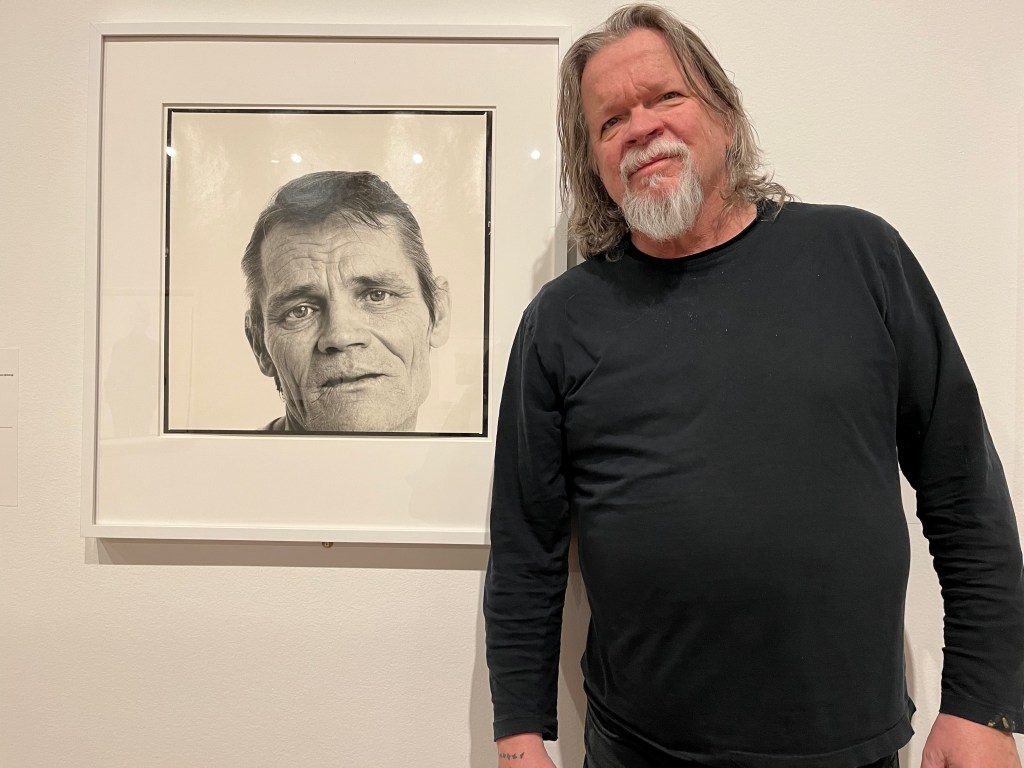
At the top of this blog is a photo of me with a Richard Avedon photo portrait of Chet Baker taken recently at the Musée des Beaux-Arts de Montreal. It got me to thinking about the different worlds of experience we bring to new experiences. Thousands of people passed by the Chet Baker photo daily, but I am sure I am probably the only one who stopped for a “selfie” because of my intimate relationship with this man’s music. The way I see and hear are unique to me and based on my soul and my experience. A photo of someone else at the exhibition did not stir up similar feelings although I was tempted by the photo of Dorothy Parker whose writings I love.
Likewise the way we hear music. A friend asked me last night if I could guide him on how to listen to Jazz. My listening experience is bordering on fanatical, but is curated. I know (now) what I like, and what I am willing to invest my time in. I have to think about how someone with a different set of experiences would proceed. Many years ago when I was studying music formally I met my brother at a Jazz bar and he said “I don’t understand Jazz”. He reads music, so I brought out my Real Book and showed him what was going on. The pianist was interpreting the melody of a standard. Not quite playing it straight. when the melody ended the rhythm section continued playing the changes and the soloist improvised new melodies over the chord changes. Fairly simple. He wrote me recently 45 years later and said he discovered Miles Davis’s ‘Kind Of Blue’. He said “Now I get it” …lol.
I enjoy watching people expand their knowledge and experience and especially when we can share a mutual love for a particular piece that has particular meaning for me. I feel honoured to have a part in it.
I first heard this 1973 album at my (soon to be) lifelong friend and mentor (Charlie Biddle)’s restaurant in Val David….late 70’s. He loved it and talked excitedly about aspects of the performance that at the time were beyond me, but which I quickly adopted and refined my love for jazz with the same fervour and listened attentively. I made a cassette of this and listened in my car constantly. I would listen to it panned to the left, panned to the right, and in the middle where it is supposed to be. I don’t remember offhand the channel that had more Fender Rhodes, but one of them did(does). The comping on this record is beyond great. Well beyond great. I could listen to it now and still get excited by it. 500 Miles High in particular with Chick playing Rhodes through a wah/volume pedal….I am going to put this on tonight. Joe Farrell’s playing I am hearing in my head as I write. Haven’t played the album in about a year. I remember whole sections of his solos. Stanley Clarke on upright bass is awesome. I can listen to the entire album and focus just on the bass or the keys or the sax. The vocals not so much. I find Flora Purim a bit “pitchy” at times, but I love it still. Her husband Airto Moreira on traps and percussion sounds like a section. I will include a link below so you can listen for yourselves, but I encourage you to listen on speakers or good headphones. Most people don’t anymore which is a shame. I have owned this album as an l.p. As a CD the aforementioned cassette and now mp3: mp3 is the easiest, but the vinyl lived.