When I had just started listening to Jazz at the age of eighteen or so, I had a very scant record collection. I had a John Coltrane Twofer called Black Pearls; Tom Scott and The LA Express; Erroll Garner ‘Concert By The Sea’ and perhaps a few others. My favourite pastime in those days was crate digging in used record stores. I also checked out any record section anywhere. One day in a Kresge’s or K Mart store in a mall in St.Jerome, Quebec I came across an artist I had never heard of. Chet Baker.
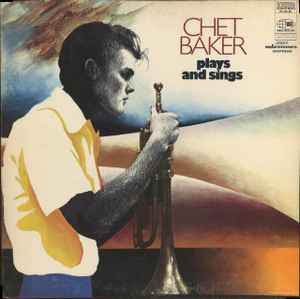
Something about the artwork and the handsome portrait drew me to this record. That, and the price of 69 cents. It was a “cutout”. A hole drilled in the corner and reduced to clear. I took it home and put it on my turntable in my bedroom and listened to each side in turn. I was attracted to the music. All Ballads. Some of the songs I had heard from my dad’s collection. Ella and Sinatra sang But Not For Me, My Funny Valentine, Summertime. I really liked that this was a quartet. Piano, Bass and Drums with Chet either playing trumpet or singing. His sultry androgynous voice delivered each song in a way that immediately connected with my soul. My collection today consists of 39 albums with Chet Baker as the leader(443 songs). Most of the albums are fairly high quality although some were just attempts to cash in for dope money. Chet, famously, was a notorious heroin addict. Even the ones where Chet is not 100 % have some redeeming qualities.
One night this week I was listening to Luciana Souza on her album “The Book Of Chet” which is a beautiful tribute to Chet’s memory and songs from his repertoire that are associated with him. One of those songs is “I Get Along Without You Very Well” by Hoagy Carmichael based on a poem by Jane Brown Thompson. which is a rueful ode to a lost love and the irony inherent in a statement that is untrue. Beautiful capture of a common life event. Luciana sings it well with a slight hint of her Brazilian accent. Her voice is sultry and her phrasing and pitch are excellent, but there was something missing. I went downstairs in the morning and put on Chet singing the song. To me, Chet’s version (from 1954) seems more believable. Chet’s pitch sometimes a bit flat, his frugal use of vibrato only on certain words. He wrenches the mixed emotion evoked in the lyric and tells the story as if it is his. I don’t mean too disparage Luciana. Hers is plaintive, reverent, perfect, professional, well recorded, sublime, in fact, but to me, it only made me desire to hear Chet’s original.
Chet starts off with a celeste intro (Celeste is a bell-piano…rare in jazz… best known for The Dance Of The Sugar Plum Fairy by Tchaikovsky) and Chet sings the first A section as if it is an aside. A soliloquy, A private moment. On the second A section Russ Freeman switches to piano and the whole rhythm section supports Chet’s singing gently in two, then some movement in the bass on the bridge. The outro ends with arco bass underpinning “break my heart in two”. A perfect little vignette of suffering and regret.
In my music program on my computer I have 16 different versions of this song from artists as disparate as Amos Lee and Chrissie Hynde, Jerry Jeff Walker, Linda Ronstadt, Kurt Elling, Kandace Springs and Diana Krall. I have four versions by Billie Holiday from very late in her career. Sublime. A second Chet Baker version from late in his career/life which is akin in feel to Billie Holiday. I know what came next and their tragic endings colour my impression of these versions. My favourite of the other versions is Sinatra”s which comes from one of the first concept albums ever “In The Wee Small Hours…” which was an artistic outpouring of his amorous troubles with Ava Gardner at that time. Frank’s version has Nelson Riddle’s strings underpinning his grief and is entirely believable. His emotional warble at times in this song sound unfeigned.
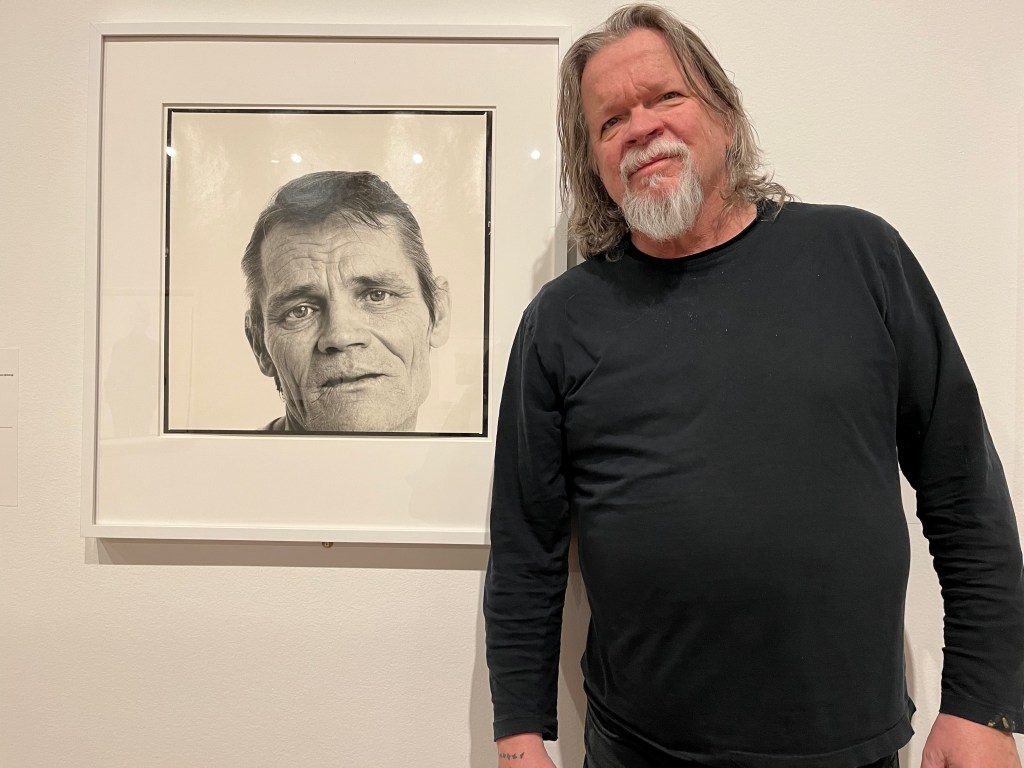
At the top of this blog is a photo of me with a Richard Avedon photo portrait of Chet Baker taken recently at the Musée des Beaux-Arts de Montreal. It got me to thinking about the different worlds of experience we bring to new experiences. Thousands of people passed by the Chet Baker photo daily, but I am sure I am probably the only one who stopped for a “selfie” because of my intimate relationship with this man’s music. The way I see and hear are unique to me and based on my soul and my experience. A photo of someone else at the exhibition did not stir up similar feelings although I was tempted by the photo of Dorothy Parker whose writings I love.
Likewise the way we hear music. A friend asked me last night if I could guide him on how to listen to Jazz. My listening experience is bordering on fanatical, but is curated. I know (now) what I like, and what I am willing to invest my time in. I have to think about how someone with a different set of experiences would proceed. Many years ago when I was studying music formally I met my brother at a Jazz bar and he said “I don’t understand Jazz”. He reads music, so I brought out my Real Book and showed him what was going on. The pianist was interpreting the melody of a standard. Not quite playing it straight. when the melody ended the rhythm section continued playing the changes and the soloist improvised new melodies over the chord changes. Fairly simple. He wrote me recently 45 years later and said he discovered Miles Davis’s ‘Kind Of Blue’. He said “Now I get it” …lol.
I enjoy watching people expand their knowledge and experience and especially when we can share a mutual love for a particular piece that has particular meaning for me. I feel honoured to have a part in it.
I am curating a series of performances based on my favourite songs. This is a very difficult undertaking for someone who loves music the way I do.
Imagine having to choose one’s favourite twenty blades of grass from an enormous lawn.
I tend to revere music that moves me intellectually and viscerally that I feel I could recreate in a meaningful personal way. That being said, it is still hard to refine my choices categorically or by artist.
*************
The song I opened up the evening with was “Biloxi” by Jesse Winchester. Why Jesse? If Jesse, Why not “Yankee Lady” or “Isn’t That So” or any of the dozen or so of his songs that are in my repertoire? Indeed. My job as a curator is to cull but also point toward the light.
Biloxiwas written at a time when Jesse could not return to the USA because he was evading the draft. The memory and longing for a place unreachable is something most people can relate to. Come to think about it, Yankee Lady is also a longing for a time and place unreachable as well.
I was fortunate enough to hear and see Jesse live many times in very intimate venues like Rose’s Cantina, La Sala Rosa, The Belladonna Ballroom, Le Petit Campus and The Yellow Door among many others.
One story I remember from the Yellow Door was when some regulars were hanging out with Jesse upstairs between sets and this young woman with “issues” burst into the room and flung herself down on the couch beside him while saying: “Oh Jesse I’m so afraid to lose the love we’ve found”. I don’t recall exactly what happened next with any accuracy, but there was much laughter and she was escorted out gently.
One of my daughters visited Biloxi and was underwhelmed. To me, Biloxi is a place like Narnia or Lothlorien or Shangri-La. The lure is in it’s attainability only through one’s imagination. The melody of Jesse’s song stands strong against so many other three chord hymn-like melodies. It build images and tension and the last line of each verse releases with the weather.
**********
When I was about sixteen I went to a tiny store in a village (Ste. Adele) near my home and they had a rack of about ten LPs and one was by a guy I’d never heard of whose name I thought was pronounced Cock burn (remember I was fifteen). I bought the album, and never looked back. Bruce Cockburn (silent ck) has featured in my listening ever since. I have almost all his albums and have about a dozen of his songs in my songbook.
“Pacing The Cage” is from deep in his career. He is musing on “is that all there is?” The coming of the outbound stage. I relate to this as we all age. The last verse is perfect.
“Sometimes the best map will not guide you
You can’t see what’s ’round the bend
Sometimes the road leads through dark places
Sometimes the darkness is your friend
Today these eyes scan bleached-out land
For the coming of the outbound stage
Pacing the cage”
**********
February 1964. I was in second grade. The buzz amongst all the clueless little knobs at my primary school was about something called ‘The Beatles’. Everybody vowed to watch Ed Sullivan and see what all the hype was about. We watched it weekly anyway. First I saw of a band that changed everything in my world and the whole world and who contributed so much to the lexicon of great songs. I was unaware of pop music at all up until this point my experience was liturgical music (I sang in an Anglican choir) Broadway tunes like ‘My Fair Lady’ and ‘Oklahoma’ and jazz standards that Ella or Frank sang and TV themes.
My cousins had the first five or six singles and I got to know the songs very well, and when I could control the radio I did. I’d listen to the local youth oriented radio station much to my father’s distaste.
The first Beatles record I owned was “Beatles ’65 and I love all the songs on it. No Reply, I’m A Loser, Baby’s In Black to name a few. I chose “I’ll Be Back” because of the lovely harmony between John and Paul. My arrangement takes it’s speed and specially tuned guitar from Shawn Colvin while maintaining the two part harmony of the Beatles. I love the way Sharon and I play this and we were each on really great guitars made by renowned local Luthier Michael Greenfield.
**********
The songs of Bob Dylan got on my Radar quite early on. I loved his songs and singing and loved versions by Peter, Paul and Mary, The Byrds, The Band, The Turtles and everybody else. I made my own CD of his music: https://ianhanchet.bandcamp.com/album/dealin-from-the-bottom-album and have another twenty or so of his songs that I perform. I chose “Queen Jane Approximately” because Sharon and I as Tumbleweed learned it only recently and I feel we do it very well. It is from perhaps my favourite Dylan album (Highway 61 Revisited). I particularly love the Bass note pedal point on the first Won’t you come see me (D/A and G/A ) of each verse. The song is similar to Like A Rolling Stone in that it is a warning to someone who used to be close. It is fun to play and sing.
**********
Fran Landesman was an interesting character whose poetry and lyrics resonate with me. She is perhaps best known for “Spring Can Really Hang You Up The Most” and I am partial to “Ballad Of The Sad Young Men” which she wrote with Tommy Wolf. I first heard it sung by Roberta Flack. It is a portrait of loneliness and the relentless passage of time of several subsets of humanity who hang out in bars looking for something or someone to little or no avail. It has been covered by hundreds of Jazz artists like Kenny Burrell and Chet Baker, whose influence on me is great.
**********
I hesitated to put “Can’t Help Falling In Love” in the show because it is truly a chestnut. Jeff listened to my arrangement and encouraged me to keep it in. It turned into an impromptu choir sing along with the audience. The melody is based on “Plaisir d’Amour” but what I like is the way it was reharmonized and sits well on the guitar in this key.(G)
**********
I went through a phase of listening to jazz guitarist Bill Frisell and couldn’t get enough of his music. I read he was on an album called “West” by an artist named Lucinda Williams. I bought it and I immediately was drawn to her authenticity and the way the guitars were treated on her album but I especially was drawn to “Everything Has Changed”. The places of our youth transform over time and if we return after a long absence, it is off putting. I relate very much to this. The rural village (St. Sauveur-des-Monts) where my parents are now buried had no traffic lights when I was younger, but now is a bustling urban shopping, skiing and dining hub with dozens of traffic lights. There is a sad release in the song as the lyric “everything has changed” is sung. It is over an A minor (ii) chord and sung with a resigned acceptance of the facts. Up to that point we have heard nothing but G (I) and C (IV) major chords.
**********
This next song was released a day before my 11th birthday. I heard it for the first time in my family’s car on the way to ski at Chalet Cochand. We were passing under an arced overpass on the autoroute just before turning off to go to Ste. Marguerite when “Strawberry Fields Forever” played and changed my life forever. I never thought about performing it until I heard Bill Frisell play it so beautifully on his Telecaster. I took some of his ideas, but I can sing too. Jeff Deeprose plays a wonderful counterpoint to my melody.
**********
The British Invasion was not only the Beatles and Rolling Stones, there were hundreds of combos whose songs were heard in North America at that time. One of my favourite bands was Gerry and The Pacemakers. My actual favourite song of theirs is “Don’t Let The Sun Catch You Crying” but I selected
“Ferry Cross The Mersey” because it fit the loss and longing theme and Jeff plays exquisitely on it.
**********
Even with a limit of only twenty songs, I still decided to choose another Fran Landesman song.I love her songs that much. This one is called “Scars”. She co-wrote this song with Simon Wallace who sent me an encouraging message after hearing my performance on a YouTube video, People who have lived have scars. Nothing to be ashamed of. The lyric has some very deep scars to ponder and forgive.
*********
It seems this song “Walk Away Renee” been around since I was a choirboy. After choir rehearsals I would walk home singing this at the top of my lungs. Trouble is I only knew that one line…lol. I learned the rest as an adult, but that hook still gets me. I love to sing it with wild abandon. I asked my friend Daniel Frankel to join in on piano.
*********
I first heard “You Shouldn’t Look At Me That Way” on a film trailer at the movie theatre as I was leaving. Usually I ignore ads, but I heard Elvis Costello’s voice on a song I was not familiar with. I knew immediately that I wanted to hear it again. Elvis’ writing had developed artful sophistication. This had “Jazz chords” and some real surprises in the harmony. I enjoyed transcribing and learning it. It is presented here as one of two Elvis Costello songs in my favourites.
*********
As a youngster I heard many songs by the Bee Gees, my favourites being “Words” and “I Started A Joke” and I’ve Got To Get A Message To You”. These tickled my pre pubescent intellect. It wasn’t until I heard Al Green sing “How Can You Mend A Broken Heart” that I “got” it though.
*********
As a fledgling guitarist, the music of Cream offered easy to pick out riffs. Almost everybody I knew who played could play the riff for “Sunshine Of Your Love”, “Badge” and “Strange Brew”. I have always wanted to learn “White Room”, so I did. The songwriting in Cream matched the virtuosity of Eric Clapton, Jack Bruce and Ginger Baker (and Pete Brown lyricist). I still listen to these songs and they are as fresh sounding and yet hauntingly familiar as when I first heard them.
*********
I have always maintained that the best gig I ever had was being a dad. I have two wonderful resourceful and independent daughters, and even though my marriage to their mother didn’t last, they survived and thrived. My sister told me I should seek out this song called “Daughters” by John Mayer out as she thought it was a fit for me. She was right. I had fun learning John Mayer’s chord voicings of what turned out to be easier than it sounds.
*********
The next song is perhaps the greatest description of unrequited teenage crushes that I am aware of. David Francey observed one of his step children agonizing and this gem flowed out of him. I have felt it. The imbalance between desire and ability. As we age, we tend to be more realistic and hopefully have the communication skills to follow our hearts. The feelings in “Broken Glass” are wonderful to evoke and experience again through this perfect song. Jeff and I are both teachers, and well aware that this scenario is universal.
*********
I decided to include a second Bruce Cockburn song. This is also from deep into his career.
“Candy Man’s Gone” is about the false promise of expectations of success and prosperity. It gives pause for thought. “Catch it in a dream, catch it in a song” is one of my favourite lines to sing.
*********
I heard “At This Moment” over thirty years ago. It was a throwback to R&B from an even earlier era . Billy Vera and the Beaters recorded this and I have always loved it. It tells of a wrenching breakup.
*********
The song “So Sad” is my favourite of the favourites for now. I first heard it sung by Jennifer Warnes, but it was written by Mickey Newbury. I get to wail on it and use my lung power to wring out the wretchedness. The song name drops iconic figures from American culture which is kinda fun, but the real power of the song is in the chorus “I’m Sooooooo Saaaaad”.
*********
I concluded this first evening of my favourite songs with “Painted From Memory” which is by Elvis Costello and Burt Bacharach. We have already established my reverence for Costello’s work, ut the addition of Burt harkens back to the soundtrack of my youth where Dionne Warwick dominated the radio waves for a decade. The premise of this song is so sad. He paints from memory a face that he loves but who no longer loves him. The smile is not for him. “Funny how looks can be deceiving”.

 Vignettes and Bagatelles